
Modern poultry have been selected for rapid growth, improved feed conversion and high productivity (Zulkifli et al., 2011). While this genetic progress has improved performance, it has also increased metabolic heat production and reduced thermotolerance (Figure 1). As ambient temperature rises above the thermoneutral range, birds experience physiological and metabolic alterations, including reduced feed intake, energy reallocation, and altered nutrient use, which predispose them to oxidative stress (Geraert et al., 1996; Cassuce et al., 2013; Scanes and Dridi, 2022). Oxidative stress is defined as an imbalance favoring reactive oxygen species (ROS) over antioxidant defenses, ultimately contributing to losses in growth and efficiency.
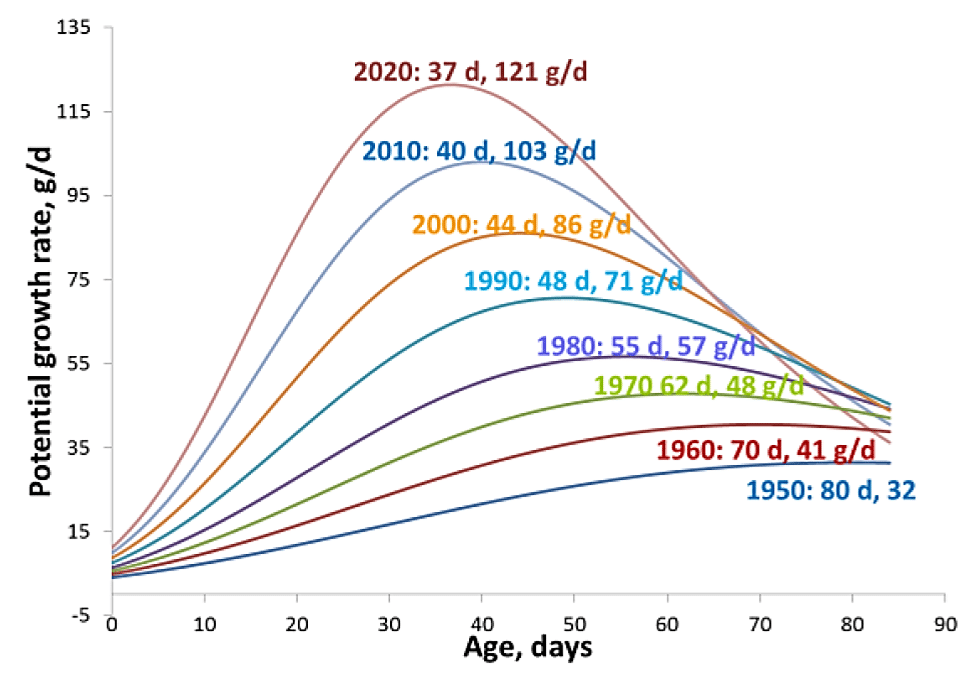
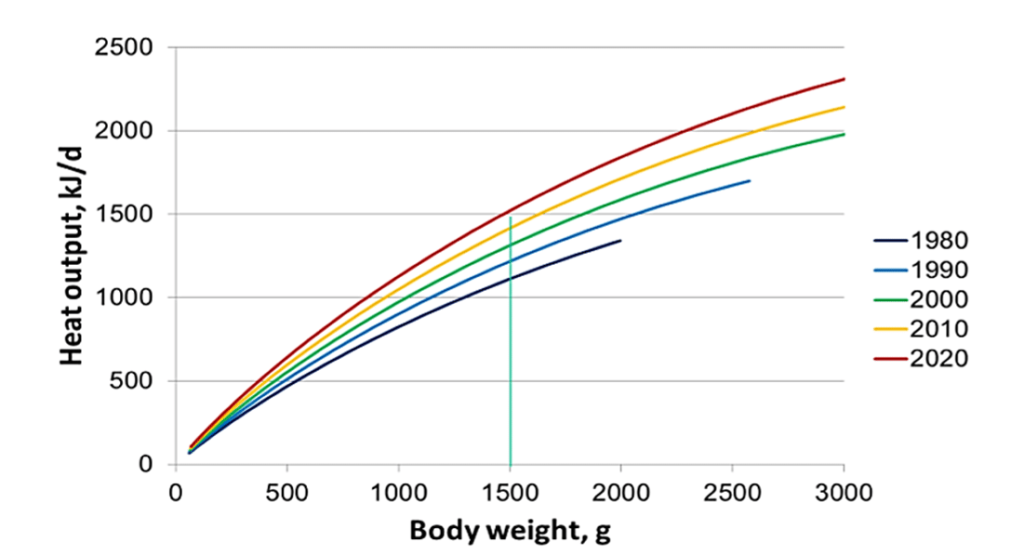
Figure 1: Genetic progress in broilers has increased growth rate alongside metabolic heat production. Predicted growth rate (top) and heat output relative to body weight (bottom) across decades. (Adapted from Schothorst Feed Research, 2024).
Under modern production conditions, oxidative stress rarely results from a single factor. Instead, it emerges from the convergence of multiple interacting challenges (environmental, nutritional, management, and biological) that frequently co‑occur, thereby increasing risk, particularly in fast‑growing poultry lines (Figure 2).
1. Common drivers of oxidative stress in poultry production
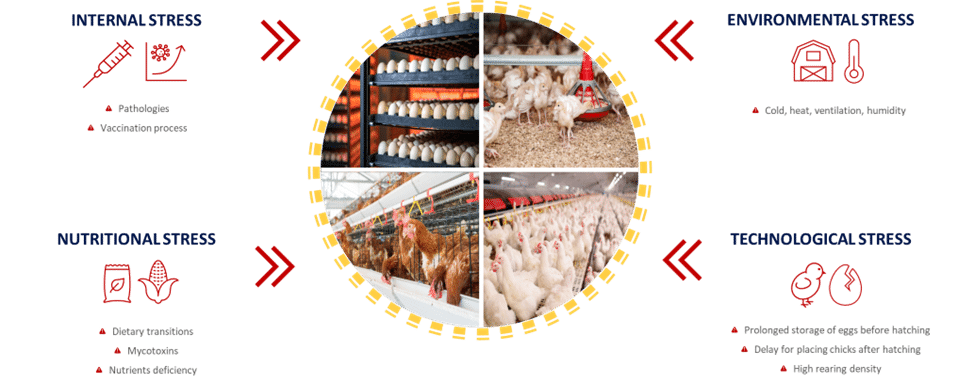
Figure 2: Main stressors in poultry production (Adapted from Surai et al., 2019).
1.1 Strain and age nuances:
Fast‑growing broilers are more susceptible to oxidative stress than slower‑growing strains, reflecting differences in how antioxidant defenses adapt during development. In particular, fast-growing birds appear to rely more on glutathione reductase (GR), a marker of antioxidant recycling, whereas slow-growing birds maintain more stable superoxide dismutase (SOD) activity, suggesting a stronger ability to sustain first‑line antioxidant protection across tissues (Figure 3).
Early life is also marked by rapid shifts in antioxidant protection: some defenses such as peroxidases and GR decline soon after hatch, catalase (CAT) peaks early and then falls, while SOD progressively becomes more prominent with age (Figure 3) (Coudert et al., 2023).
These adaptations help explain why susceptibility to oxidative stress—and its biological cost—varies with both strain and age, highlighting the importance of considering genetic background and developmental stage under commercial conditions.
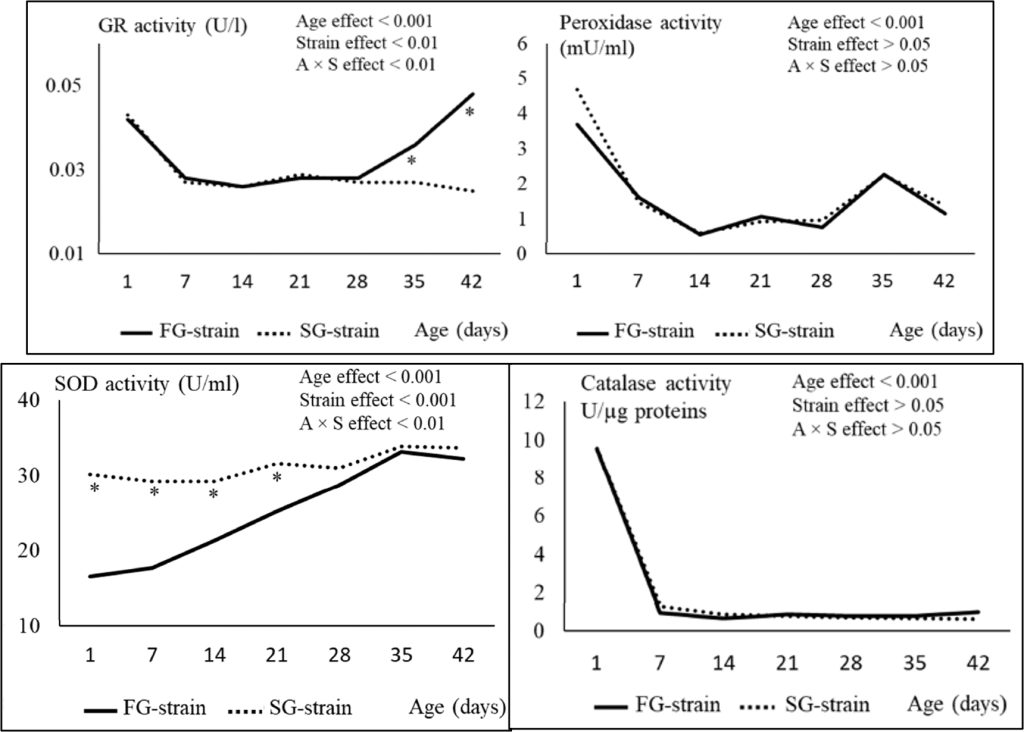
Figure 3: Effects of age (A) and strain (S) and their interaction on antioxidant enzyme activities—plasma GR, peroxidase, and SOD, and catalase in breast muscle. Data are presented as the means; n = 10 per strain and per age. *: Significant difference (p < 0.05) between strains for a given age; FG = fast-growing, SG = slow-growing (Coudert et al., 2023).
1.2 Environment and management:
Commercial production systems expose birds to environmental and management stressors that increase oxidative pressure and challenge antioxidants defenses (Oke et al., 2024). In practice, high stocking density often coincides with poor air quality and limited airflow; when combined with elevated ambient temperature, these conditions intensify heat stress and worsen animal performance.
1.3 Temperature and heat waves:
Rising ambient temperatures and more frequent heat waves increase are among the most visible challenges for poultry performance. They increase the risk of oxidative stress by promoting ROS formation and making thermoregulation more difficult (Oke et al., 2024; Zaboli et al., 2019). Under heat stress, birds increase respiratory effort to dissipate heat, while feed intake and nutrient use become less efficient, diverting resources away from growth toward maintenance functions (Hu et al., 2019; Scanes and Dridi, 2022). Under field conditions, these changes translate into reduced performance and poorer feed efficiency.
1.4 Dietary toxins exposures:
Feed quality is a critical entry point for oxidative stress, as birds may be exposed to mycotoxins, oxidized ingredients, contaminated fats, or metals. These contaminants can elevate ROS production, inhibit antioxidant defenses, compromise tissue integrity and epithelial integrity, and reduce gut absorptive capacity, especially when exposure is prolonged or combined (Omar, 2013; Oke et al., 2024 ; Zhao et al., 2017; Wang et al., 2018). Overall, feed quality is therefore a key control point for limiting oxidative stress, preserving gut barrier function, and supporting animal performance under field conditions (Dahlke et al., 2015; Oke et al., 2024).
1.5 Microorganisms:
Microbial pressure is a recurrent challenge that can affect gut integrity, immune activation, and bird performance. During infection, the immune system is activated and the phagocytic cells generate ROS to eliminate pathogens through a defense mechanism known as the “oxidative burst”; however, if this response exceeds antioxidant capacity, the same protective mechanism can contribute to oxidative stress in the host (Kogut et al., 2020; Slauch, 2011). Microbial disturbances can amplify oxidative pressure and barrier dysfunction, linking microbial stress to impaired performance.
Together, these stressors place birds under sustained oxidative pressure, with cumulative and often underestimated consequences for performance, health, and product quality.
2. The underestimated cost of oxidative stress:
2.1 Growth, feed intake, and feed conversion:
In the field, oxidative stress is first reflected in reduced feed intake, poorer nutrient use, and lower growth performance. By impairing digestion and absorption and diverting energy toward antioxidant defense and repair, oxidative stress directly affects feed efficiency and productivity (Oke et al., 2024).
2.2 Gut health and immunity:
The gastrointestinal tract is constantly exposed to dietary and microbial stressors, making it highly vulnerable to oxidative stress. When oxidative balance is disturbed, intestinal integrity is compromised, absorption is impaired, disease susceptibility increases, and growth is further affected (Kim et al., 2023; Oke et al., 2024). Maintaining immune defenses under oxidative stress also requires energy that would otherwise support growth and productive functions (Oke et al., 2024).
2.3 Reproduction and egg quality:
Oxidative stress can compromise reproductive performance, egg and semen quality by damaging lipids, proteins, and DNA in reproductive cells and tissues (Oke et al., 2024). In practice, this can contribute to weaker shells, altered albumen consistency, reduced yolk quality, and impaired embryo development (Jin et al., 2022). In males, excess ROS is associated with sperm DNA fragmentation and impaired motility, ultimately reducing fertility (Khan, 2011).
2.4 Meat quality:
Oxidative stress during rearing and processing promote lipid and protein oxidation in muscle, leading to deterioration of color, flavor, texture, and nutritional value. It can also contribute to myopathies such as white striping and wooden breast (Carvalho et al., 2017; Shakeri et al., 2018). Overall, oxidative stress affects not only live performance, but also the quality and value of poultry products.
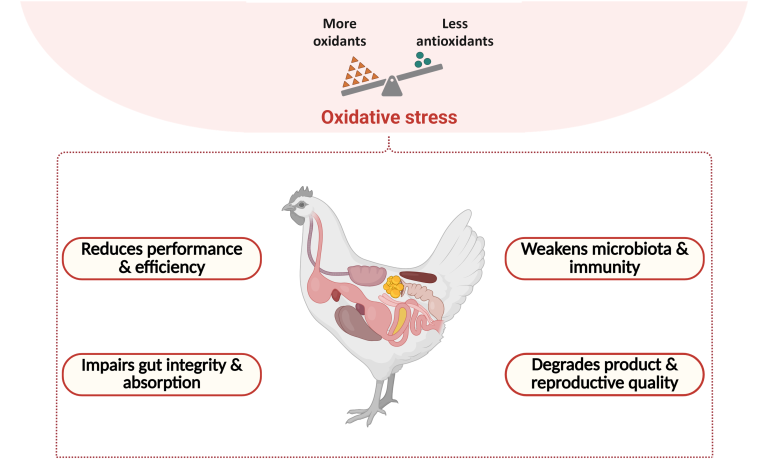
Figure 4: Consequences of oxidative stress in poultry. Created in BioRender.
In summary, oxidative stress carries cumulative and often underestimated costs for performance, health, and product quality, depending not only on exposure to stressors, but also on how birds regulate and respond to oxidative challenges.
3. How birds respond to oxidative stress: from oxidative signals to antioxidant defense:
ROS are naturally produced during normal metabolism. At controlled levels, they act as signaling molecules that help cells adapt to metabolic or environmental changes. This beneficial and transient response is known as oxidative eustress. When ROS production exceeds the bird’s detoxification capacity, this balance shifts towards “oxidative distress”. In this situation, ROS no longer support adaptation; instead, they contribute to cellular damage, tissue dysfunction, and impaired performance (Gessner et al., 2016; Surai et al., 2019; Oke et al., 2024) (Figure 5).
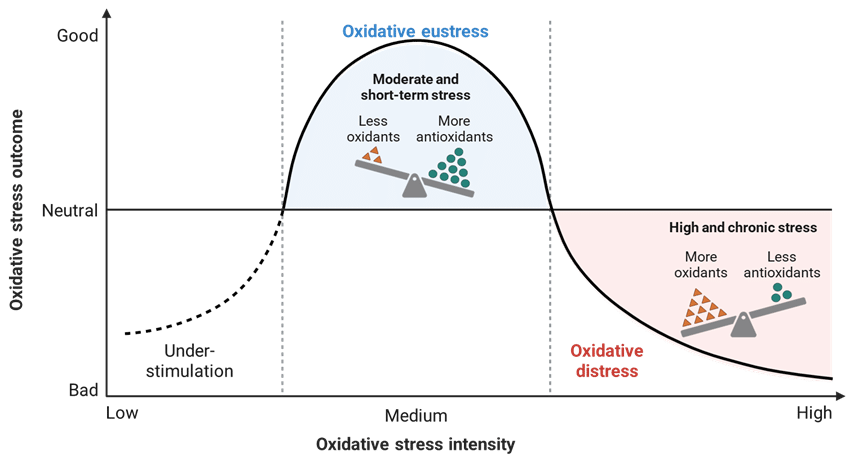
Figure 5: Relationship between oxidant–antioxidant balance and oxidative stress outcome. Created in BioRender.
To maintain this balance, birds rely on a coordinated antioxidant network composed of enzymatic and non‑enzymatic defenses. In practice, this system performs four essential functions: limits ROS formation, neutralizes oxidants, interrupts oxidative chain reactions, and repairs or removes damaged cellular components (Figure 6) (Panda and Cherian, 2014; Surai et al., 2019).
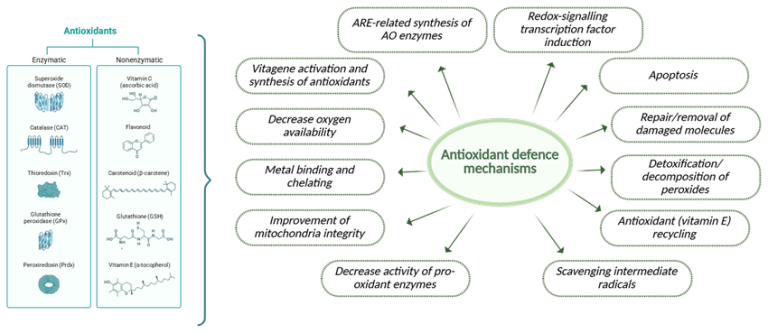
Figure 6: Antioxidant defense mechanisms (Adapted from Surai et al., 2019). Created in BioRender.
Even with an effective antioxidant system, commercial stressors can exceed the bird’s adaptive capacity. This is where nutritional and management strategies become important to support antioxidant protection, adaptation, and repair.
4. Targeted nutrition in the control of oxidative stress:
Under stress conditions, the objective is not to replace the bird’s endogenous antioxidant defenses, but to keep them responsive and able to adapt to increased oxidative pressure. Nutritional levers such as vitamin E, selenium, methionine, and plant‑derived compounds can help support this adaptive capacity. Among them, polyphenols are of particular interest because they may contribute not only to limiting oxidative damage, but also to supporting antioxidant adaptation and resilience (Lipiński et al., 2017). Polyphenols are plant secondary metabolites found in grains, fruits, tea, and many botanicals. While they are known to exert antioxidant effects, the mechanisms involved and the relative contribution of direct pathways remain under investigation. Nevertheless, polyphenols are gaining interest because they may support endogenous antioxidant defenses, modulate inflammatory pathways such as Nrf2 and NF‑κB (Surai, 2020), and interact with the gut microbiota. For example, fermented Ginkgo biloba leaf meal increased intestinal Nrf2 expression in chickens, a key regulator of antioxidant defenses (Y. Niu et al., 2019). Through these combined actions, polyphenols help sustain oxidative balance, intestinal integrity, and overall resilience in poultry.
5. A functional nutritional solution combining prebiotic and antioxidant support:
5.1. CalseaGrow: designed to address persistent commercial challenges
Throughout the production cycle, birds are exposed to multiple sources of stress (Figure 2), and therefore depend on adequate antioxidant reserves to maintain physiological balance. In this context, flock management and targeted nutrition play a key role in supporting health and performance.
Within this framework, Phosphea has developed CalseaGrow, a functional raw material for monogastric species that combines prebiotic and antioxidant support. Based on a citrus extract and calcified algae, CalseaGrow is designed to contribute to the antioxidant reserve, support gut function, nutrient absorption, and mineral utilization. Its micro‑granulated form ensures homogeneous incorporation at 1 kg/t, making it suitable for both conventional and organic production systems.
5.2. Supporting antioxidant status and egg quality during late lay
A representative trial in laying hens during the late stage of production showed that CalseaGrow supplementation improved both systemic antioxidant reserves and internal egg quality at the end of lay.
In this study, 574 hens, aged 68 to 79 weeks received either a control diet or CalseaGrow at 1 kg/t over a 10‑week period. From 74 to 78 weeks, the antioxidant status was assessed using the RESEDA test, which measures the effectiveness of circulating antiradical defenses of a blood sample and allows to release the different reserves of antioxidants contained in the cells. Stored antioxidants are released during this test via the addition of different enzymes: Glucosidase (for R1 reserves), Sulfatase (for R2 reserves) and Glucuronidase (for R3 reserves). Egg quality parameters, such as vitelline membrane rigidity, were evaluated toward the end of the trial.
Supplementation with CalseaGrow increased antioxidant reserve, reflected by a longer half‑hemolysis time (T1/2) in reserve fractions R1 and R3, indicating improved resistance to oxidative damage (Figure 7). This enhanced antioxidant status was associated with measurable improvements in internal egg quality.
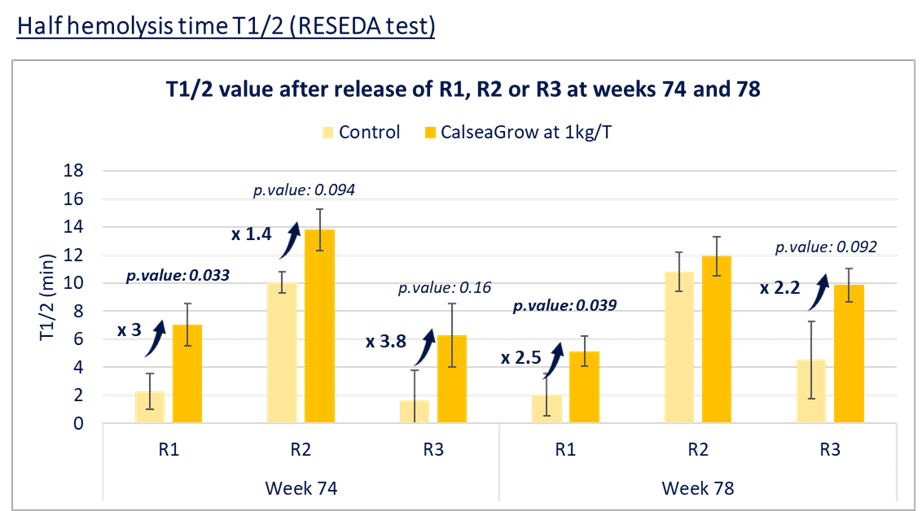
Figure 7: Effect of CalseaGrow on antioxidant reserves in laying hens, assessed by the RESEDA test. Increased half hemolysis time (T1/2) indicates improved resistance to oxidation. CalseaGrow (1 kg/t) increased T1/2 values, mainly in reserve fractions R1 and R3. The RESEDA test is a patented method developed by Dr. Michel Prost (2013).
During oxidative stress, free radicals can cause damage to cells such as lipid peroxidation and proteins oxidation. The vitelline membrane, composed of lipids, is one of the essential parameters related to egg quality and embryo development CalseaGrow demonstrates a significative improvement of membrane rigidity by 2.4% at week 78 (Figure 8).
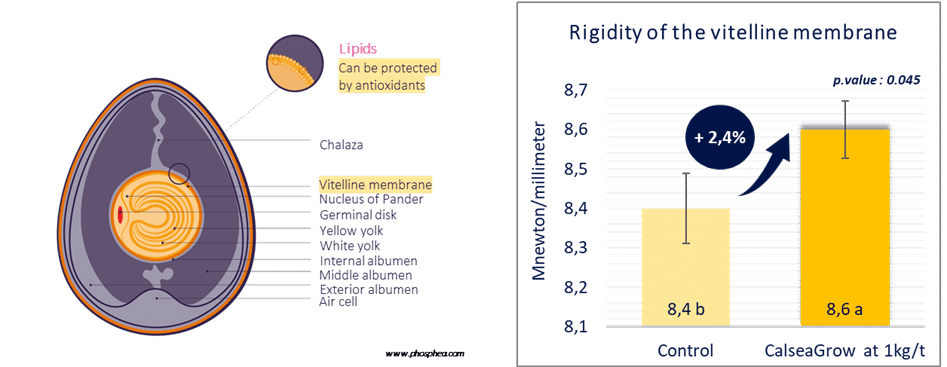
Figure 8: Effect of CalseaGrow on vitelline membrane rigidity. Supplementation with CalseaGrow (1 kg/t) significantly increased vitelline membrane rigidity, suggesting greater protection of lipid-rich egg structures against oxidative stress.
Overall, these results indicate that dietary inclusion of CalseaGrow supports the antioxidant capacity and contributes to the preservation of egg structure and quality during the later stages of the laying cycle, when oxidative pressure and age‑related vulnerability are increased.
📚 Bibliographic references
Boveris, A., & Chance, B. (1973). The mitochondrial generation of hydrogen peroxide: General properties and effect of hyperbaric oxygen. Biochemical Journal, 134(3), 707–716.
Carvalho, R., Shimokomaki, M., & Estévez, M. (2017). Poultry meat color and oxidation. In Poultry Quality Evaluation (pp. 133–157). Woodhead Publishing.
Cassuce, D. C., Tinôco, I. D. F., Baêta, F. C., Zolnier, S., Cecon, P. R., & Vieira, M. D. F. (2013). Thermal comfort temperature update for broiler chickens up to 21 days of age. Engenharia Agrícola, 33, 28–36.
Chance, B., Sies, H., & Boveris, A. (1979). Hydroperoxide metabolism in mammalian organs. Physiological Reviews, 59(3), 527–605.
Chen, Z., Xing, T., Li, J., Zhang, L., Jiang, Y., & Gao, F. (2022). Oxidative stress impairs meat quality of broilers by damaging mitochondrial function, affecting calcium metabolism and leading to ferroptosis. Animal Bioscience, 35(10), 1616–1627.
Coudert, E., Baéza, E., Chartrin, P., Jimenez, J., Cailleau-Audouin, E., Bordeau, T., & Berri, C. (2023). Slow and Fast-Growing Chickens Use Different Antioxidant Pathways to Maintain Their Redox Balance during Postnatal Growth. Animals, 13(7), 1160.
Dahlke, F., Gonzales, E., Gadelha, A. C., Maiorka, A., Borges, S. A., & Rosa, A. P. (2015). Development of the digestive tract of broilers fed diets containing different types of fiber. Revista Brasileira de Ciência Avícola, 17(1), 43–50.
Das, K., & Roychoudhury, A. (2014). Reactive oxygen species (ROS) and response of antioxidants as ROS-scavengers during environmental stress in plants. Frontiers in Environmental Science, 2, 53.
Estévez, M. (2015). Oxidative damage to poultry: From farm to fork. Poultry Science, 94(6), 1368–1378.
Geraert, P. A., Padilha, J. C. F., & Guillaumin, S. (1996). Metabolic and endocrine changes induced by chronic heat exposure in broiler chickens: Growth performance, body composition and energy retention. British Journal of Nutrition, 75(2), 195–204.
Gessner, D. K., Ringseis, R., & Eder, K. (2016). Potential of plant polyphenols to combat oxidative stress and inflammatory processes in farm animals. Journal of Animal Physiology and Animal Nutrition, 101(3), 605–628.
Hu, R., He, Y., Arowolo, M. A., Wu, S., & He, J. (2019). Polyphenols as potential attenuators of heat stress in poultry production. Antioxidants, 8(3), 67.
Jin, J., Zhou, Q., Lan, F., Li, J., Yang, N., & Sun, C. (2022). Microbial composition of egg components and its association with hatchability of laying hens. Frontiers in Microbiology, 13, 943097.
Khan, R. U. (2011). Antioxidants and poultry semen quality. World’s Poultry Science Journal, 67(2), 297–308.
Kim, H. W., Lee, S., Hur, S., Kil, D. Y., & Kim, J. H. (2023). Effects of functional nutrients on chicken intestinal epithelial cells induced with oxidative stress. Journal of Animal Science and Technology, 65, e22.
Kogut, M. H., Lee, A., & Santin, E. (2020). Microbiome and pathogen interaction with the immune system. Poultry Science, 99(4), 1906–1913.
Lipiński, K., Mazur‑Kuśnirek, M., Antoszkiewicz, Z., & Purwin, C. (2017). Polyphenols in monogastric nutrition – A review. Annals of Animal Science, 17(1), 41–58.
Oke, O. E., Akosile, O. A., Oni, A. I., et al. (2024). Oxidative stress in poultry production. Poultry Science, 103, 104003.
Omar, H. (2013). Mycotoxins-induced oxidative stress and disease. In Mycotoxins and Their Implications in Food Safety. InTechOpen.
Panda, A. K., & Cherian, G. (2014). Role of vitamin E in counteracting oxidative stress in poultry. The Journal of Poultry Science, 51(2), 109–117.
Scanes, C. G., & Dridi, S. (Eds.). (2022). Sturkie's Avian Physiology (7th ed.). Academic Press.
Schothorst Feed Research (SFR). (2024). Applied poultry nutrition: Minerals [Seminar presentation].
Shakeri, M., Cottrell, J. J., Wilkinson, S., et al. (2018). Betaine and antioxidants improve growth performance, breast muscle development and ameliorate thermoregulatory responses to cyclic heat exposure in broiler chickens. Animals, 8(10), 162.
Slauch, J. M. (2011). How does the oxidative burst of macrophages kill bacteria? Still an open question. Molecular Microbiology, 80(3), 580–583.
Surai, P. F., Kochish, I. I., Fisinin, V. I., & Kidd, M. T. (2019). Antioxidant defence systems and oxidative stress in poultry biology: An update. Antioxidants, 8(7), 235.
Surai, P. F. (2020). Antioxidant systems in poultry biology: Heat stress, vitagenes and performance. Wageningen Academic Publishers.
Wang, Y., Zhao, H., Liu, J., et al. (2018). Copper- and arsenic-induced oxidative stress and immune imbalance are associated with activation of heat shock proteins in chicken intestines. International Immunopharmacology, 60, 64–75.
Niu, Y., Zhang, J. F., Wan, X. L., et al. (2019). Effect of fermented Ginkgo biloba leaves on nutrient utilisation, intestinal digestive function and antioxidant capacity in broilers. British Poultry Science, 60(1), 47–55.
Zaboli, G., Huang, X., Feng, X., & Ahn, D. U. (2019). How can heat stress affect chicken meat quality? A review. Poultry Science, 98(3), 1551–1556.
Zhao, H., He, Y., Li, S., et al. (2017). Subchronic arsenism-induced oxidative stress and inflammation contribute to apoptosis through mitochondrial- and death receptor-dependent pathways in chicken immune organs. Oncotarget, 8(25), 40327–40344.
Zulkifli, I., Al‑Aqil, A., Omar, A. R., Sazili, A. Q., & Rajion, M. A. (2011). Crating and heat stress influence blood parameters and heat shock protein 70 expression in broiler chickens showing different resistance to heat stress. Poultry Science, 90(9), 2045–2050.